
Visible pigmentation is not one single condition. Uneven-looking tone, sun-related discolouration, post-blemish marks and medically diagnosed pigmentation disorders can have different causes and may require different approaches.
Cosmetic ingredients such as niacinamide, tranexamic acid, arbutin, vitamin C and glutathione are frequently incorporated into formulations designed to support a brighter and more even-looking complexion. Their presence alone, however, does not guarantee a particular result. Concentration, formulation, stability, skin suitability and consistent use all matter.
Why Does Pigmentation Require an Individual Approach?
Melanin is the pigment responsible for much of the colour in skin. Its production and distribution can be influenced by factors including sun exposure, inflammation, previous blemishes, hormonal changes, ageing and individual biology.
Before recommending professional cosmetic care, practitioners should distinguish between a cosmetic concern and a condition that requires assessment by an appropriately qualified healthcare professional.
A cosmetic product should not be presented as diagnosing, preventing or medically treating melasma or another pigmentation disorder.
Niacinamide
Niacinamide is a form of vitamin B3 widely used in cosmetic skincare.
Depending on the finished formulation, it may help support:
- A more even-looking skin tone
- Improved skin-barrier function
- Reduced appearance of dullness
- Smoother-looking texture
- Improved skin comfort
Niacinamide is versatile, but higher concentration is not automatically better. Overall formulation and individual tolerance remain important.
Tranexamic Acid
Tranexamic acid is used in some cosmetic formulations developed for the appearance of uneven pigmentation and visible dark spots.
Published research has created interest in topical tranexamic acid, but evidence about one formulation should not be transferred automatically to every product containing the ingredient.
Cosmetic marketing should focus on improving the appearance of uneven tone rather than claiming to medically treat pigmentation disorders.
Arbutin
Arbutin is a cosmetic brightening ingredient associated with the appearance of more uniform skin tone.
It is commonly incorporated into formulations targeting visible dark spots and uneven-looking pigmentation. Product concentration, stability and compliance with applicable cosmetic requirements remain important.
Descriptions such as “permanent whitening” or “completely stops melanin” are not responsible cosmetic claims.
Vitamin C
Vitamin C is used in skincare for its antioxidant and radiance-supporting properties.
In an appropriately formulated product, it may help support:
- Brighter-looking skin
- A more refreshed complexion
- Protection against oxidative environmental stress
- More even-looking tone
Vitamin C stability varies considerably between formulations. The ingredient name alone does not reveal how stable or effective the finished product will be.
Glutathione
Glutathione is an antioxidant ingredient used in some cosmetic brightening formulations.
Its presence should not be interpreted as proof of guaranteed whitening or permanent pigmentation correction. Evidence, product formulation and method of use must be considered separately.
Cosmetic claims should remain focused on radiance and the appearance of more even-looking tone.
Why Supporting Ingredients Matter
Pigmentation-focused skincare should not ignore hydration, barrier comfort and general skin condition.
Supporting ingredients may include:
- Sodium hyaluronate
- Glycerin
- Aloe extract
- Centella asiatica extract
- Green tea extract
- Other moisturising and antioxidant ingredients
A formulation that combines targeted cosmetic ingredients with hydration and skin-conditioning support may be easier to incorporate into a balanced professional skincare program.
Why Sun Protection Is Essential
Sun exposure can contribute to the appearance and recurrence of uneven pigmentation. A pigmentation-focused skincare program is incomplete without suitable daytime sun protection.
Clients should follow appropriate sun-protection guidance, use products correctly and avoid assuming that a brightening serum replaces sunscreen.
No pigmentation product can responsibly promise lasting improvement while ongoing environmental exposure is ignored.
Why the Complete Formulation Matters
A long ingredient list does not automatically mean a superior product, and one fashionable ingredient does not guarantee results.
Professionals should evaluate:
- The complete ingredient list
- Product classification and intended use
- Approved claims and labelling
- Stability and storage requirements
- Skin suitability
- Supporting hydration and barrier ingredients
- Supplier authenticity
- Professional education
- Realistic expectations
- Applicable local requirements
Professional judgment should take priority over ingredient trends.
What Is ZENA Pro Whitening+?
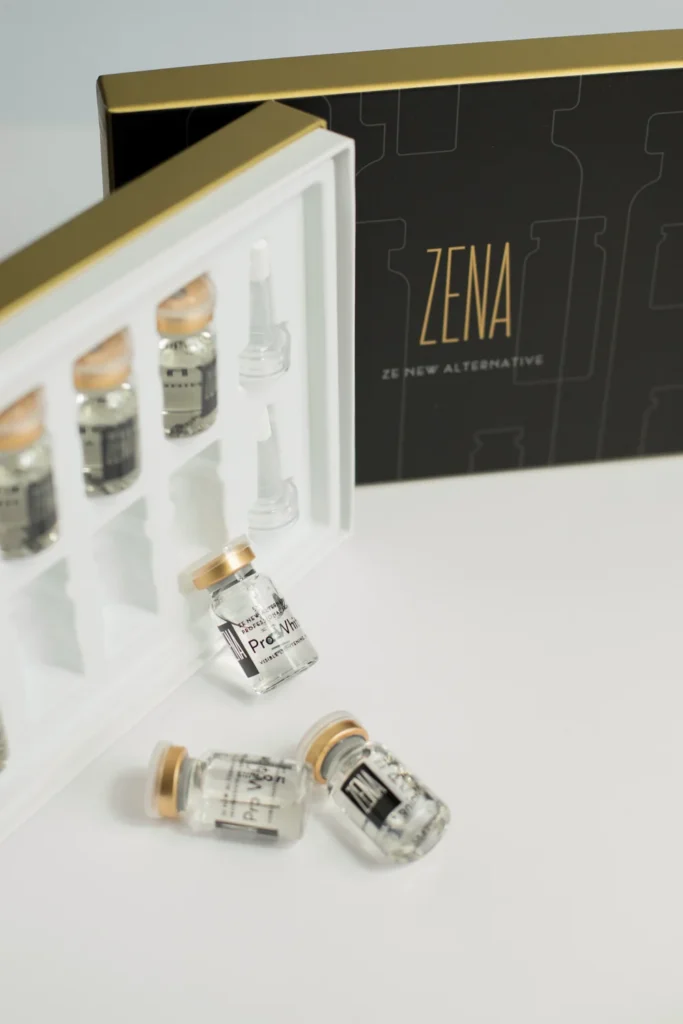
ZENA Pro Whitening+ is a professional cosmetic ampoule serum formulated with niacinamide, glutathione, tranexamic acid, arbutin, vitamin C, sodium hyaluronate and selected botanical extracts.
It is positioned within professional cosmetic skincare programs focused on the appearance of uneven tone, visible pigmentation irregularities, dullness and post-blemish marks.
Glow Derma supplies ZENA Pro Whitening+ to qualified aesthetic clinics and skincare professionals across the UAE with product education and professional support.
Learn more about ZENA Pro Whitening+ professional pigmentation serum in the UAE.
Frequently Asked Questions
Which skincare ingredient is best for pigmentation?
There is no universally best ingredient. Appropriate selection depends on the type and cause of the visible pigmentation, skin condition, formulation, tolerance and professional assessment.
Can cosmetic skincare permanently remove pigmentation?
No responsible cosmetic product should promise permanent pigmentation removal. Visible pigmentation can have multiple causes and may recur.
Does tranexamic acid treat melasma?
Tranexamic acid has been investigated in pigmentation research, but a cosmetic containing it should not automatically be marketed as a medical treatment for melasma. Individuals concerned about melasma should obtain appropriate professional assessment.
Can niacinamide and vitamin C be used in the same formulation?
They can be formulated together when the finished product has been appropriately developed for stability, compatibility and skin tolerance. Consumers should follow the instructions for the specific product rather than relying on general ingredient myths.
Is stronger always better?
No. Higher concentrations may increase irritation without providing proportionally greater cosmetic benefits. Formulation quality and suitability matter more than pursuing the highest percentage.
Where can UAE clinics obtain ZENA Pro Whitening+?
Qualified clinics and aesthetic professionals can contact Glow Derma regarding professional supply, product education and current training opportunities.
Professional Pigmentation Skincare Supply in the UAE
Glow Derma supports UAE clinics with ZENA professional skincare, product education and responsible guidance.
Explore ZENA Pro Whitening+ professional pigmentation serum in the UAE or contact Glow Derma regarding professional supply and training.
Disclaimer
This article provides general cosmetic-skincare education and does not constitute medical advice, diagnosis or treatment. Persistent, changing or concerning pigmentation should be assessed by an appropriately qualified healthcare professional. Product use and claims should follow approved labelling, applicable UAE requirements and product-specific professional instructions.
Further Reading
These references provide background and product information; they do not establish identical results for every formulation.